
Pitcher Head Protection: What Are the Options?
A pitcher stands 60 feet 6 inches from a hitter on a standard baseball field. In youth leagues, the pitcher is even closer. A pitcher has only a fraction of a second to react if the ball is hit hard back at him. Yet most pitchers, from Little League through college, take the mound with no head protection at all. That's not new. It's just how the position has always been played.
If you're a parent, coach, or player asking what's actually out there for pitcher head protection, the honest answer is that the list is short. Here's a look at the real choices.
Option 1: Nothing
Unfortunately, this is the typical approach for most pitchers at every level. A standard cap does nothing to reduce the force of impact from a batted ball. It manages sun and sweat, not collision force. Most pitchers wear nothing because nothing else has fit the position comfortably, not because the risk isn't real. Comebackers happen. The pitcher stands closer to the batter than any other fielder and finishes his delivery in a position that limits how quickly he can react or get a glove up.
Option 2: Foam Bump Caps and Thin Liners
Some players and parents have tried foam bump caps or thin foam inserts slipped inside a regular cap. These products are generally built for bump and scrape protection in industrial or work settings, not for the kind of high-speed impact a batted or thrown ball produces. When tested against the NOCSAE impact standard, this category of product has not held up well. Bump caps, foam plates, and thin hat inserts tested for comparison scored above 5,000 Severity Index, and some scored above 10,000, roughly 5 to 10 times higher than the NOCSAE pass threshold of being below 1200 SI. A product that fails by that margin is not offering meaningful protection against the kind of impact a comebacker or line drive produces.
Option 3: Full Helmets
Batting helmets exist and they work for their purpose, but pitchers don't wear them. A helmet changes the fit, weight, and feel of the position in a way the game hasn't widely accepted. You'll occasionally see a pitcher return to the mound in a helmet after a documented injury, but it's rare, and it's not a realistic everyday option that most players or coaches will choose to adopt.
Option 4: MAZCAP, a Protective Insert Under a Normal Baseball Hat
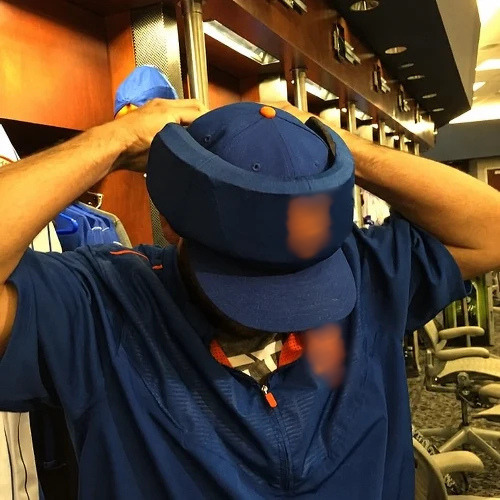
This is where MAZCAP fits in. MAZCAP is a protective insert that goes inside an ordinary baseball hat. MAZCAP is sized to the player using the MAZCAP sizing chart, available in S/M, M/L, and L/XL, so it sits properly inside the hat.
MAZCAP is powered by VECTORWARE, a patented gel-based cushion technology that deforms on impact and redirects energy away from the player's head. MAZCAP is designed to pass NOCSAE impact testing. MAZCAPs have been tested at an independent, third-party NOCSAE-certified lab, and all versions passed Front, Front-Boss and Side impact testing.
The practical difference for a pitcher is that MAZCAP is thin, light, and hidden under a traditional baseball hat, so the player maintains the traditional look of the game while adding a layer of protection that a bare cap, or a foam insert that fails NOCSAE testing, simply doesn't provide.
What This Means When You're Choosing
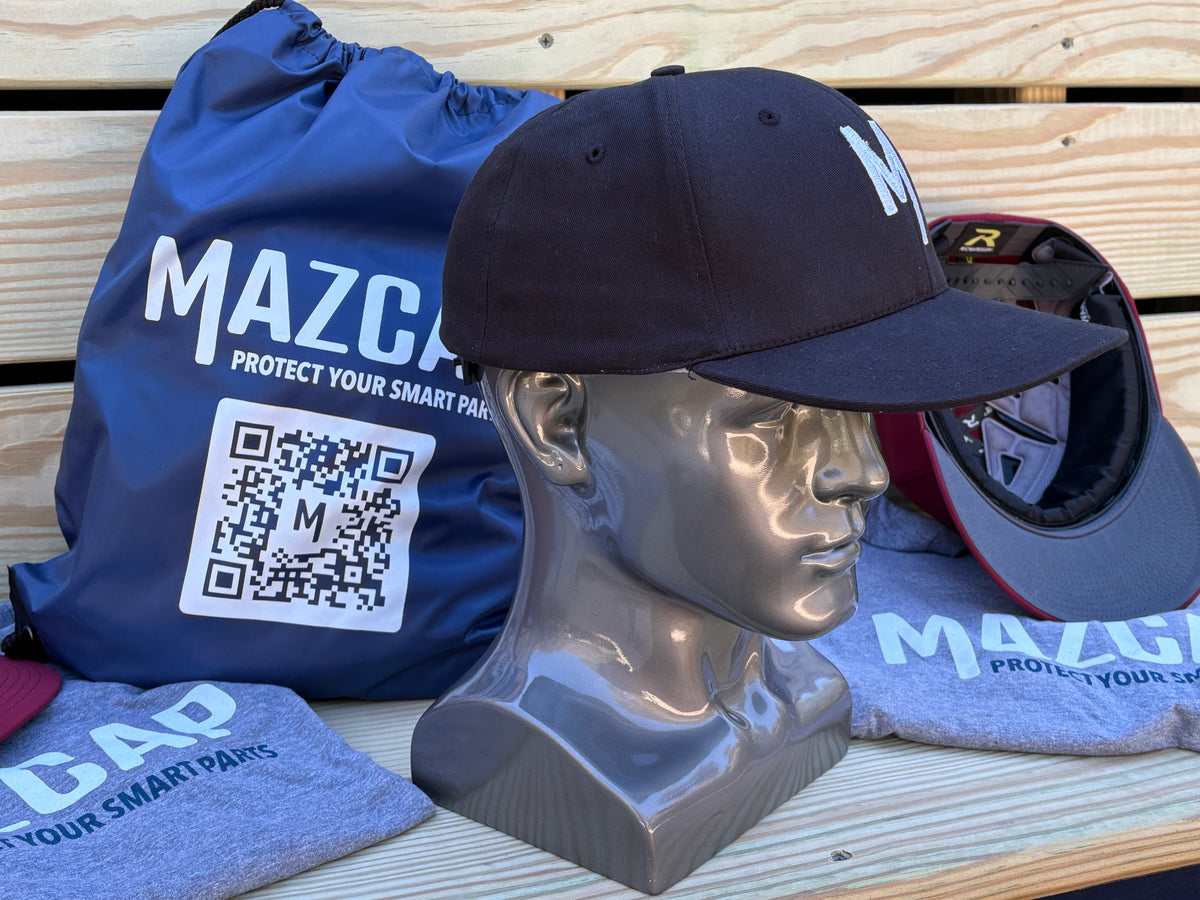
Lined up side by side, MAZCAP is the only option that can offer legitimate risk reduction (by passing NOCSAE testing), and at the same time, be thin enough to maintain the traditional look of the game by being hidden under an ordinary baseball hat so you can't tell the player is wearing safety equipment.
Pre-order MAZCAP to get one for your pitcher, or learn more about the technology behind it on the VECTORWARE page.